as the frequency and complexity of cyber attacks increase, companies need to comprehensively consider the long-term impact of the initial selling price and subsequent annual maintenance costs when purchasing high-defense cloud servers from the united states. this article focuses on "in-depth analysis of us high-defense cloud server selling price and annual maintenance cost comparison suggestions". it systematically introduces pricing components, influencing factors, maintenance projects and comparison methods, aiming to provide an executable evaluation framework for it and security decision-makers to help balance budgets and security needs.
the quotation of a high-defense cloud server in the united states usually consists of basic computing and storage resource fees, bandwidth and traffic billing, ddos protection level and traffic cleaning capabilities, contract period discounts and various value-added services (monitoring, emergency response, log storage), etc. understanding each billing caliber and billing granularity is the first prerequisite for estimating the total cost, so as to avoid judgment bias caused by looking at only a single line item.
the main factors that affect the selling price include the location of the computer room and network export quality, peak bandwidth commitment, attack mitigation capabilities (cleaning bandwidth and cleaning strategy), sla terms, and whether on-demand scaling and customized services are provided. these factors will lead to significant differences in quotations from different suppliers for the same surface configuration, and the contract details need to be checked item by item.
annual maintenance costs not only cover regular operation and maintenance man-hours, system patches and security hardening, but also include security incident response and emergency drills, log and traceability storage costs, compliance audit costs, backup and recovery testing, and possible bandwidth excess and cleaning costs. the assessment should take into account both recurring expenses and the budget set aside for contingencies.
it is recommended to adopt the life cycle cost (tco) method, develop a unified comparison table, list the initial procurement, annualized bandwidth budget, estimated attack costs, operation and maintenance man-hours and emergency expenditures, and compare the total expenditures in three or five years at a discount. compare the same usage scenario with the traffic baseline to avoid misleading conclusions due to different configurations or traffic models.

when choosing, don’t just look at the lowest price, but make layered decisions based on business continuity needs and risk tolerance. prioritize key services to ensure higher protection levels and availability; for non-critical services, elastic protection or on-demand cleaning can be used to reduce long-term costs. reasonable sla and emergency procedures are equally critical.
costs can be saved by optimizing traffic models, using application layer caching and cdn to reduce return-to-origin traffic, negotiating with suppliers for annual or tiered billing, and introducing automated monitoring and response to reduce manual operation and maintenance overhead. at the same time, traffic baselines and anomaly detection should be established to avoid high cleaning fees due to misjudgments.
to sum up, an in-depth analysis of the selling prices and annual maintenance costs of high-defense cloud servers in the united states requires a systematic evaluation from three aspects: pricing composition, influencing factors, and annual expenditures. it is recommended to conduct a risk and traffic baseline assessment first, use a three- to five-year tco comparison method, and grade procurement and protection according to business importance to ensure security and achieve cost control.
- Latest articles
- Evaluation Of The Impact Of Partner Selection On US Companies’ Entry Into Japanese Server Projects
- Practical Guide And Advice On Choosing The Most Stable PUBG Server In South Korea
- How Does Cross-border Business Use Cloud Servers? Singapore Servers Improve Access Experience
- How To Enter The Vietnam Server Now? A List Of Graphic Steps And Common Misunderstandings That Even Beginners Can Understand.
- How Does An Enterprise Choose A Hosting Plan That Supports Multiple IPs For US Site Group Servers?
- Looking At The Stability And Compliance Requirements Of Cross-border Transactions From The Futian Hong Kong Station Group Server
- Evaluate The Compliance Certificate And Protection Capabilities Of US Cloud Rental Servers From A Security Perspective
- Purchasing Advice Hong Kong Vps Cloud Server 8 Core How To Choose The Appropriate Package According To Business Load
- Comparative Analysis Of Computer Room Distribution And Network Interconnection Performance Of Server Companies In Taiwan
- Cost Control Billing Model And Money-saving Tips For Taiwan’s Native IP Server Cloud Server
- Popular tags
-
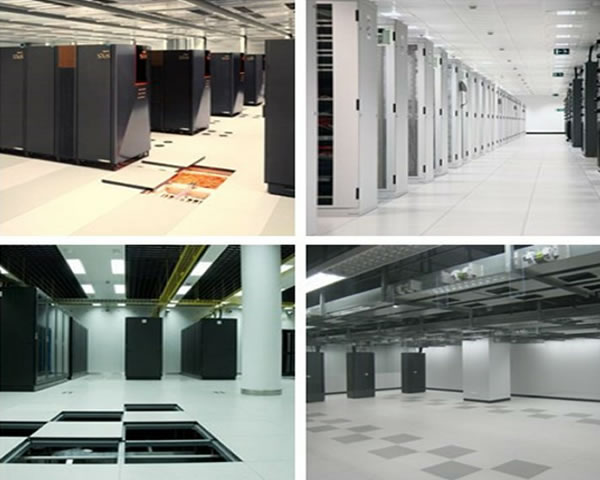
Case Sharing: Vps Server Access To The United States Optimized Application Performance Improvement Effect
through real cases, we share the optimization solutions and effects of vps server access to the united states, including routing optimization, bandwidth and tcp tuning, cdn and caching strategies, etc., to achieve practices and suggestions that significantly improve access latency and stability. -
Hybrid Deployment: Network Configuration Scheme That Combines Hong Kong Cloud Servers With US Cloud Servers
This article introduces a joint network networking solution for hybrid deployment of Hong Kong cloud servers and U.S. cloud servers, covering practical recommendations such as interconnection methods, latency optimization, security compliance, DNS/CDN scheduling, data synchronization, and fault recovery. -

How Is The Performance Of Alibaba Cloud Lightweight Server Ip In The United States?
discuss the performance of alibaba cloud lightweight servers in us ip and analyze its advantages and applicable scenarios.